

A beautiful night for us, a scary one for them
Loy Krathong, New Year's countdown or a local temple fair: people love fireworks, but for many dogs and cats it's the scariest night of the year. They hear the bangs much louder than we do and can't tell where they come from or when they'll stop. Some shake, pant and hide. Others bolt out of the house and get lost. The good news is that a little preparation makes the night much easier.
Before fireworks night
1. Check the collar and ID tag in daylight
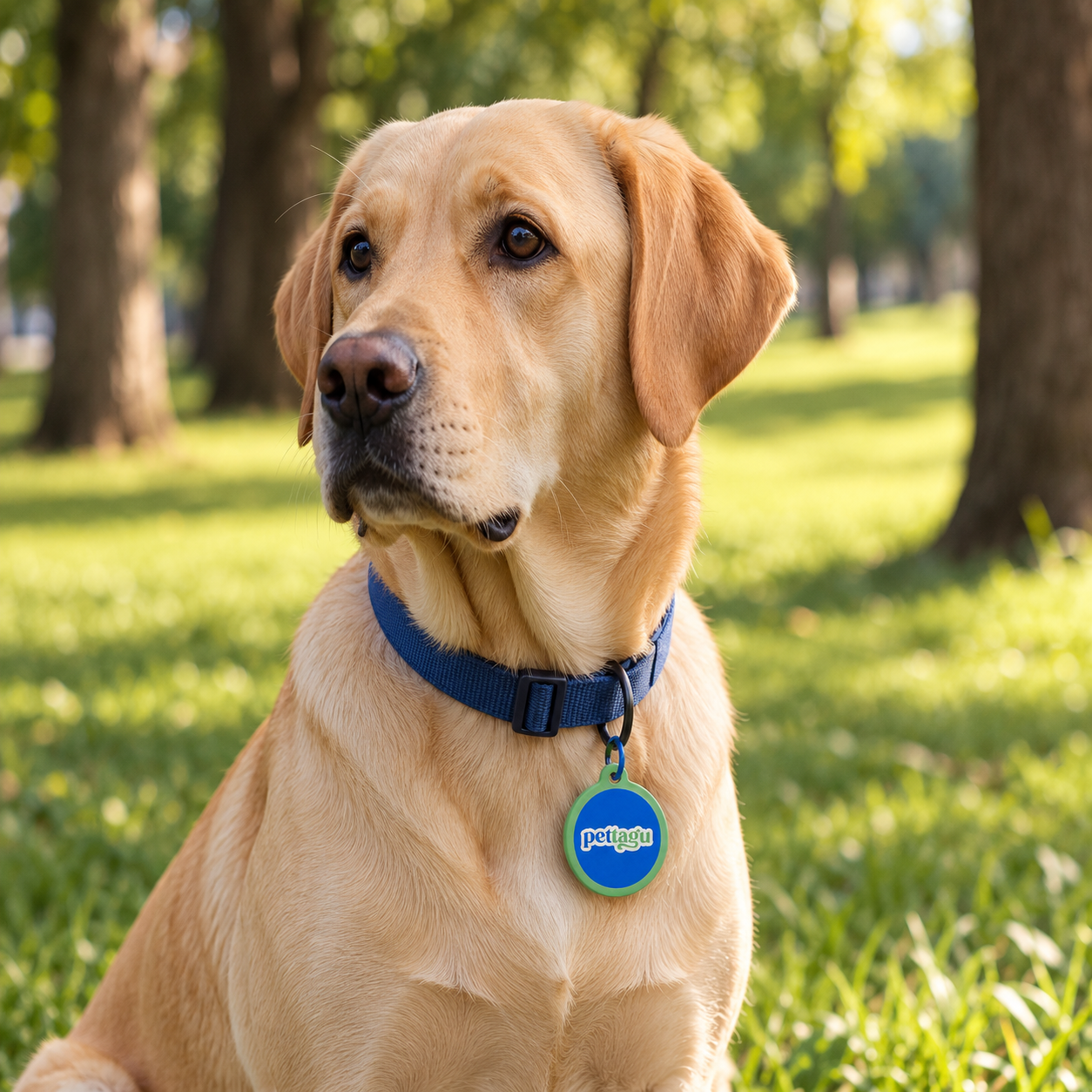
Fit the collar so two fingers slide under it, not loose enough to slip off. Make sure the number on the tag works. With Pettagu Tag, scan it to check the details. Fireworks nights are when pets most often go missing, and a tag lets finders call you straight away.
2. Walk and feed before dark
Give dogs a good walk and toilet break in the early evening, not once the fireworks start. Feed them before the noise begins. A full, tired pet settles more easily.
3. Set up the quietest spot in the house
Pick an inner room away from windows with their bed, a blanket that smells of you, water and toys. If they like to hide under a table or in a crate, let them. Half-cover a crate with a blanket to make it den-like. Cats like high or snug places, so give them a box or shelf to retreat to.

4. Close doors, windows and curtains
This muffles the noise and flashes and stops escapes through windows. Remind everyone at home to shut the front door every time.
5. Play music or TV
Soft music, a fan or the TV at normal volume helps mask the bangs. Turn it on before the fireworks start, not once your pet is already scared.
6. Stay close and act normal
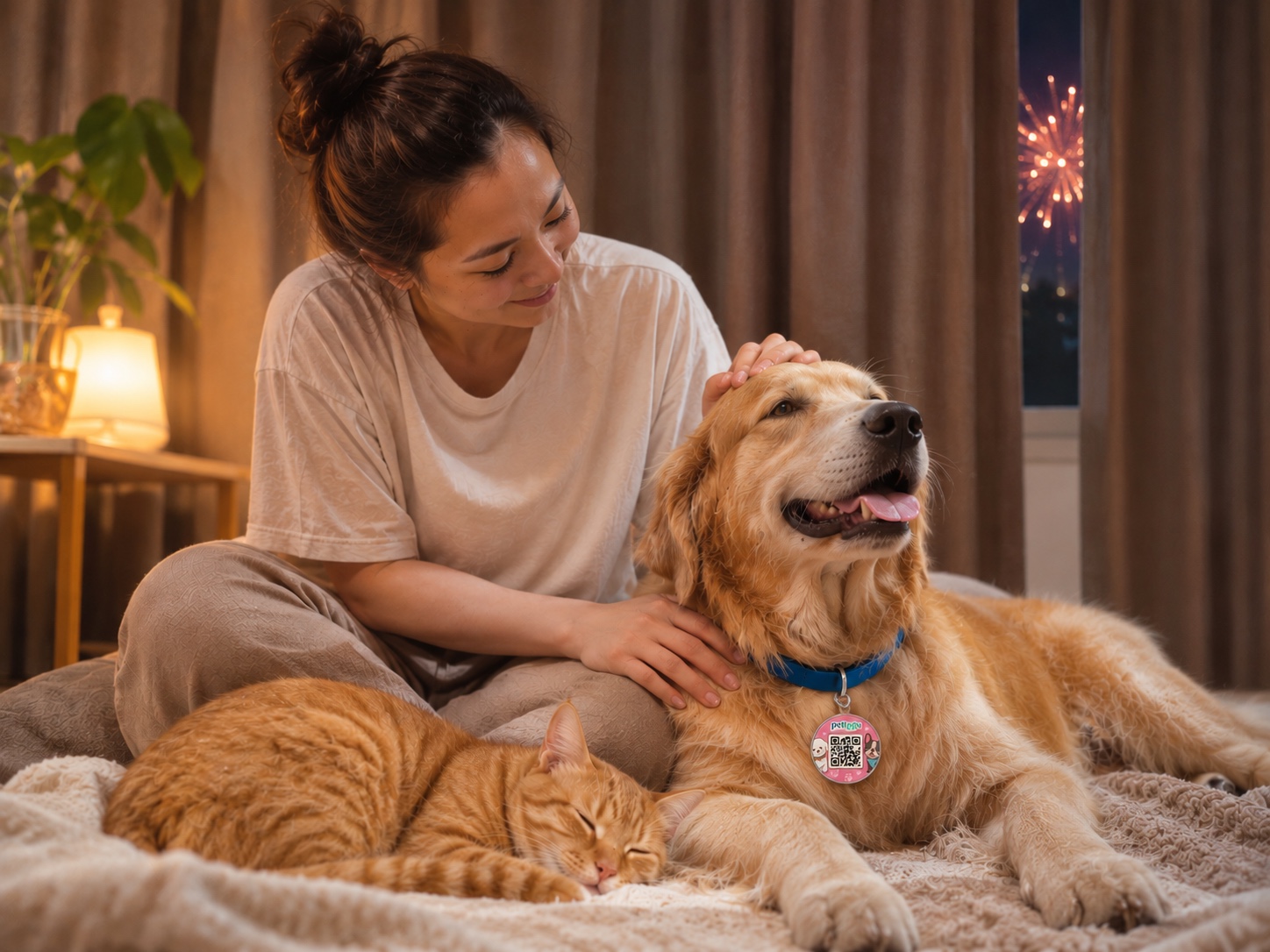
If they come to you, stroke them gently. Comforting them won't make the fear worse. Don't force them out of hiding or hold them tight. Speak calmly, and never scold them for being scared.
7. Don't leave them outside or tied up
A tied dog can hurt itself pulling or slip the lead. Bring outdoor cats in before dark. Tonight, everyone stays indoors.
If your pet gets out
- Search near home straight away. Cats usually hide close by; dogs may run further.
- Search again late at night or early morning once it's quiet.
- Post in local groups with a photo and your number, and call nearby clinics.
- See our full guide: Lost dog or cat? 7 steps to find them fast.
Sources
- Blackwell E.J. et al. (2013) Fear responses to noises in domestic dogs: Prevalence, risk factors and co-occurrence with other fear related behaviour. Applied Animal Behaviour Science 145:15-25
- RSPCA: Fireworks and pets
This article is general information. If your pet is very frightened every year or seems unwell, talk to a veterinarian.