


Why finders can't reach the owner
Most people who find a lost dog or cat want to help but don't know who the owner is. Microchips and ID tags solve this in different ways.
Side by side
1. Where it is
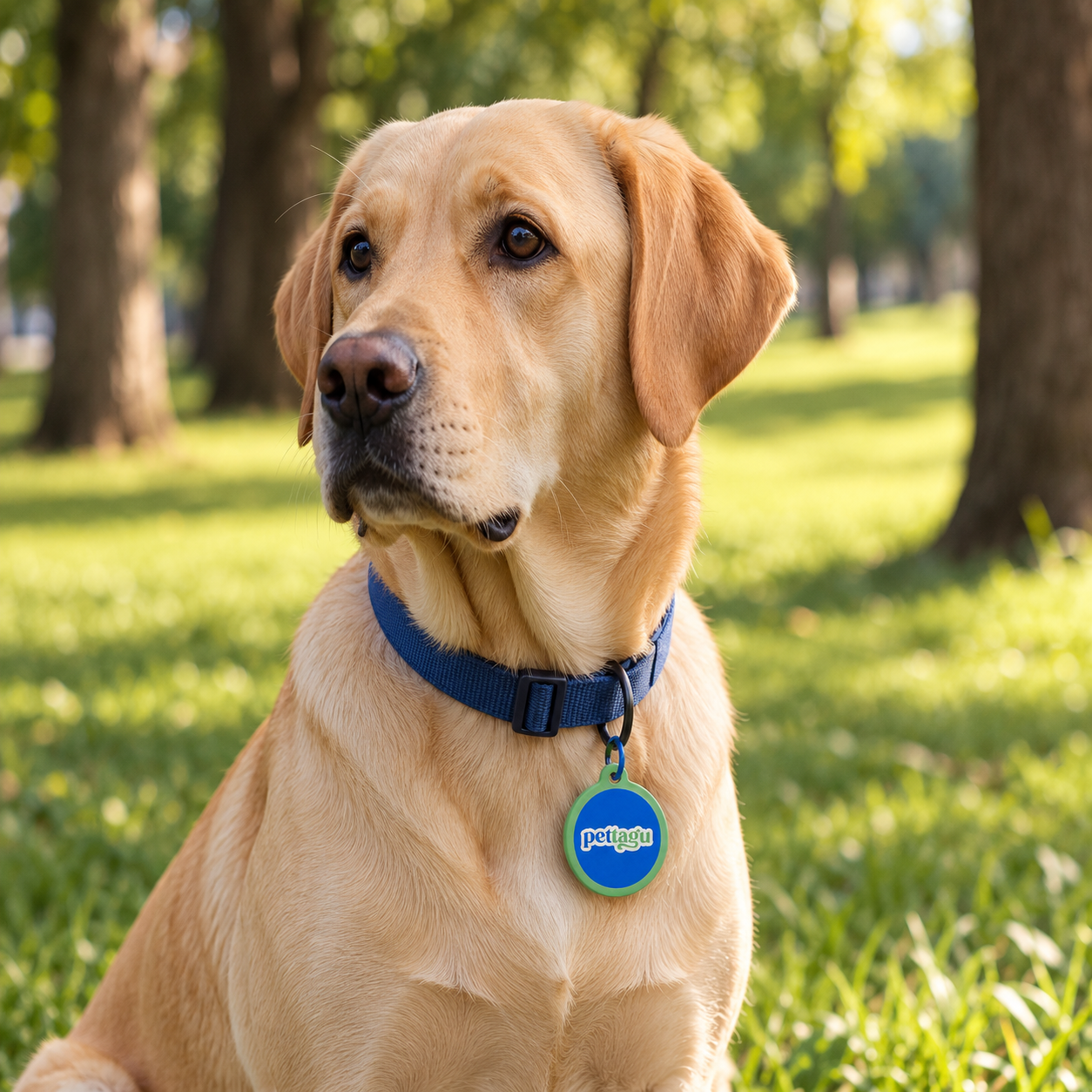
A vet implants a microchip under the skin, so it rarely gets lost. A tag hangs on the collar where people can see it, but it can be lost if the collar comes off.
2. Who can read it
A microchip needs a scanner at a clinic, hospital or shelter. Anyone can read a tag, and QR or NFC tags can be scanned with a phone.
3. What it holds
A microchip holds only an ID number that must be looked up in the registry it was registered with. A tag shows your contact number directly.

4. If your number changes
Update the microchip registry. An engraved tag must be remade, while a digital tag like Pettagu Tag can be updated in the app.
5. What each is best for
A microchip proves ownership. A tag gets your pet home faster because the finder can contact you without taking them anywhere.
What your pet should have
- A microchip implanted by a vet, with your details registered
- A collar tag with a working phone number, worn at all times
- Some areas require dogs to be registered and microchipped. Check with your local district office.
Sources
- Lord L.K. et al. (2009) Characteristics of animals with microchips entering animal shelters. JAVMA 235(2):160-167
- AVMA: Microchipping of animals FAQ
This article is general information and does not replace advice from a veterinarian or your local authority.